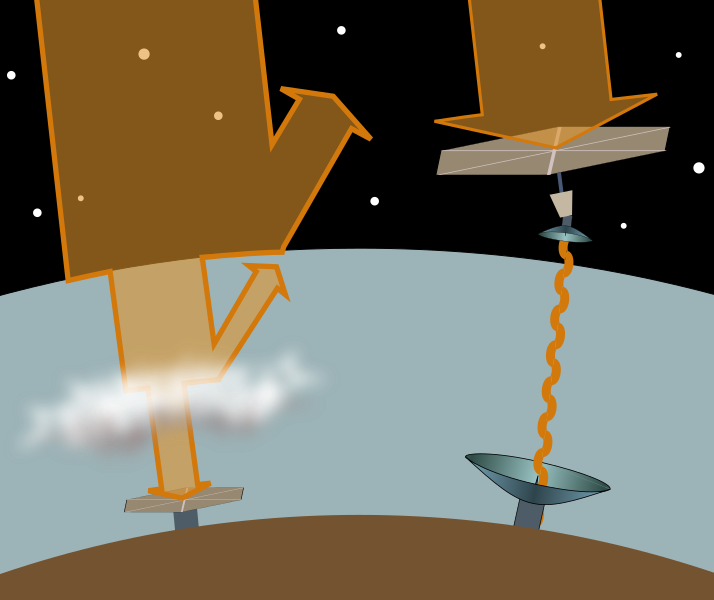
"The SPS concept is attractive because space has several major advantages over the Earth's surface for the collection of solar power. There is no air in space, so the collecting surfaces would receive much more intense sunlight, unaffected by weather. In geostationary orbit, an SPS would be illuminated over 99% of the time. The SPS would be in Earth's shadow on only a few days at the spring and fall equinoxes; and even then for a maximum of 75 minutes late at night when power demands are at their lowest. This characteristic of SPS based power generation systems to avoid the expensive storage facilities (eg, lakes behind dams, oil storage tanks, coal dumps, etc) necessary in many Earth-based power generation systems. Additionally, an SPS will have none of the polluting consequences of fossil fuel systems, nor the ecological problems resulting from many renewable or low impact power generation systems (eg, dam retention lakes).
Economically, an SPS deployment project would create many new jobs and contract opportunities for industry, which may have political implications in the country or region which undertakes the project. Certainly the energy from an SPS would reduce political tension resulting from unequal distribution of energy supplies (eg, oil, gas, etc). For nations on the equator, SPS provides an incentive to stabilise and a sustained opportunity to lease land for launch sites.
Developing the industrial capacity needed to construct and maintain one or more SPS systems would significantly reduce the cost of other space endeavours. For example, a manned Mars mission might only cost hundreds of millions, instead of tens of billions, if it can rely on an already existing capability."